Best way to get PMP certified, Karuna shares, is to simply study every single day.“Best way to get PMP certified is simply to plan to study every day, even it is for 30 minutes”, summarizes Karuna Kul.

This week Karuna shares her unique approach based on strong understanding of what it takes to get PMP certified. Karuna has an M. Tech. in Civil Engineering and works as a Project Engineer at Doha. In her free time Karun loves reading and traveling.

Let us hear from her.

What’s been your overall experience with PMP®?

PMP Lessons Learned by Karuna KulI wanted to enhance my knowledge in project management, and hence I decided to get PMP certified.

I did not choose this over any other certification at that time. Now that I am certified, I can clearly see that the PMP study journey itself has made me the better Project Manager that I was before.

During the preparation phase I got the opportunity to learn all the aspects of project management. This itself gives me the pure confidence that I can manage the projects more effectively now.

Awesome! Which study resources did you use?

For exam preparation I used the following –

One word of advice for those preparing for the exam: not everyone studies the same way, so do the research and identify which study resources you like to use.

And then stick with them.

Also read –

How did you approach the exam and what was your study plan to get PMP® certified?

I passed the exam with 4 months of dedicated study (and no social media for these 4 months).

I used “The Magic Three” formula as suggested in Rita’s book, which essential means that one needs to study the material 3 times to get a good grip.

In the first 7 weeks I read Rita’s book in depth twice. In the second reading many concepts got clearer and I understood the topic thoroughly and I could correlate each Knowledge Area and process with the rest of the Knowledge Areas and processes.

After I finished reading the book, I solved the practice test given in Rita’s book at the end of each chapter.

This gave me a baseline of how much I have learned and on which topic I need to focus more. While reading Rita’s book I used the PMBOK guide when in doubt about any topic.

Only then I began with the PMP mock tests.

I had given four mock tests sources –

Rather than just taking more mock tests, I emphasized on analysis of each mock test.

I spent 3-4 days analyzing each mock test and understanding my strengths and weaknesses.

This allowed me to focus my study time on the weak topics.

What’s the best way to get PMP® certified in your opinion?

It has to be a combination of multiple factors – choice of study resources, study plan, commitment and so on. In my case though the single most factor has been the practice of studying every day.

This may seem simple, but I cannot overstate the benefits.

If you don’t study for even a week it becomes harder to recall previously learned concepts. Such experience can lower our morale, and make us second guess our choices and decisions.

Thus studying every single day is the best approach to get PMP certified, is my opinion.

Since I did not know how many hours I will get each day, I did not have daily study goals and focused on making the most of the study time I got. [continue reading…]

PMP for construction professionals is a must, says Debashis after he passed PMP.Many have the question about the suitability of PMP for construction industry. There are many threads on social media and forums discussing about this, and multiple articles.

Debashis Maity works as a Land Surveyor, and has a diploma in Civil Engineering. He lives in the beautiful city of Makeni, in Sierra Leone. As he realized that the knowledge of project management is essential to do a better job in Construction industry, he embarked upon his journey of learning project management. A lifelong learner, Debashis began learning online, then CAPM, and finally PMP®.

More Construction companies than earlier are asking their employees to get PMP certified, as they understand the importance of learning the best possible ways of managing projects. In fact, in an interview Cornelius outlines how critical is PMP for construction industry professionals.

In this interview Debashis shares exactly how he went about passing the PMP® exam recently.

If you are preparing for your exam, don’t miss signing up for the free Simulator from the last section of this article.

What made you take up PMP®?

PMP Debashis MaityActually in mid of April of 2019 I received a mail from my company HR that whoever completes PMP certification and send their credential to HR and they are eligible to get certain amount of extra increment for PMP certification.

This was not the sole motivation for PMP, but the trigger for sure. 🙂

Then I started searching in Internet about PMP certification. Gathered enough information about PMP and registered for PMI membership.

During my research I came to know about CAPM certification, which is bit easier to pass than PMP, as this is focused for entry level project management roles. The other way to look at this was to treat CAPM as a stepping stone for PMP, which is what I did.

I started preparing for CAPM and I clear it in October 2019 and subsequently got certified.

The next target was PMP and started studying in small steps. But then because of my busy schedule and nature of my job I did not get much time for prepare.

I planned to take the exam before end of 2020, which did not happen either. My application going to expire on 21st April 2021. Thus in January 2021 I took it seriously and decided to clear it before my application expired.

I scheduled the date for exam and cleared it in my first attempt with 2 above target and 1 below target score.

Also read,

Now that you are a proud PMP®, how may this help you?

In fact my initial expected benefit was salary increment, but after passing the exam I can see a broad picture of my future career path ahead, it is much more than just salary increment. I have received incredible appreciation and recognition from my manager and the seniors in my company.

In this short time I have been able to professional connect with other like minded project managers outside of my network.

Now I can apply this invaluable knowledge and skills gained through my PMP journey in my daily activities of workplace and some of the principles in personal life as well!

Being PMP certified means acknowledgement of efforts, hard work, commitment, dedication and now I am able to follow the standards and bring the success to my project, without any guess work.

You may be interested in: This week’s top PMP resource discount coupon, offers [continue reading…]

Arindam shows how to prepare for PMP exam using Agile approach in this 'PMP lessons learned' article this week.“How to prepare for PMP exam the Agile way!” – yes, that makes it interesting and effective for sure. Arindam Thakur reveals how he did it. He also showed that no matter how busy you are, you can get PMP certified on the sides with a short and sweet (but practical) plan and commitment.
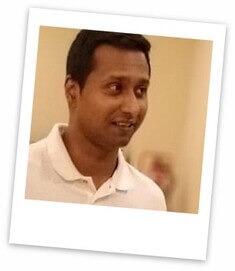
Arindam is from Kolkata and currently working in Bangalore, and has worked as Project & Program Manager in Data & Business Analytics in his long career spanning 16+ years.

When he is not taking project management challenges head on, Arindam can be found burying his head in a book while listening to music, or watching a movie.

In this article Arindam shares his 4-week plan and all the insights he gained while following it and ticking off the ‘Get PMP certified’ box.

What made you take up PMP certification?

Arindam shares his PMP journeyI have been doing IT Project and Program Management for over 8 years now. I have managed various medium and large-scale engagements over the years in ERP, Data Architecture, Analytics, and Cloud.

As it happens, most of us start as a developer and find our way into project management, mostly learning on the job.

While working as a Project Manager I always wanted to have a validation on my Project Management skills. I looked around and I saw some of my peers were studying for PMP.

On some research, I realized that this certification is sort of a gold standard in Project Management – covering pretty much all aspects of Project Management. Not to mention the earning potential as PMI has reported, of course.

Moreover, the fact that the syllabus for PMP comes from a deep analysis of present project management practices across industries and geographies, one cannot go wrong with PMP.

I did read on comparisons between Prince2 and PMP. Most of the projects I have been managing were from North America Region, where PMP is a coveted certificate and hence I decided to start the journey to become PMP certified.

How do you see PMP helping you going forward?

During the project execution, many a times we work with PMOs and other helping departments to take decisions. Although I had a sketchy idea about all these steps, I wanted to have a more profound knowledge. I expected learning for the PMP Certification would help me to bridge these knowledge gaps and would provide me with directions on how a professional should carry out the actions.

I am glad that not only I learnt Project Management end-to-end, I also received a certification for all the learning ? I am already making use of all the knowledge in my day-to-day work and quite enjoying it.

I’m also able to help my peers and other stakeholders with it whenever required, which is a nice bonus!

Can you share the study resources used?

I have mainly used the following resources:

  • PMBOK6 – for reading and reference
  • PM-PrepCast – I liked the style in which the materials were presented in the PrepCast. I took a lot of notes and whenever I could get time, I went through them to revise various concepts.
  • PM Simulator Mock Tests – I solved around 1100 questions from the simulator, took 5 full-exams in the last 3-days (scores – 80, 83, 82, 79, 77)
  • PMI Mock Tests (get free mock tests here) – another great source for preparing for the main exam, though I found it to be easier than the actual test. I scored around 75% in the only attempt.
  • Oliver Lehmann 100 questions – scored 72 in my first attempt last Sunday before the exam, gave me some confidence, as many people have mentioned that to be a harder exam.

These were pretty much what I used, knowing that one of the smart thing to do while conserving preparation time is to have just enough study resources.

Also read: Click to get free mock tests and more hand-picked PMP study resources

[continue reading…]

Make PMP plan and stick to it as much as possible, says Sanat after passing new PMP exam.“Having a good PMP plan was essential for me to get started right”, said Sanat as we chatted about his PMP exam experience.

Sanat Singh is currently pursuing his master’s in Construction Management from the National Institute of Construction Management and Research (NICMAR), Pune, India. He has received his B. Tech degree in Civil Engineering from Amity, University, Noida, U.P. 

In just 3 years Sanat has worked in sectors such as Highways, Water supply & Sanitation. He has also published 3 research papers.

I find his PMP® study tips quite insightful, don’t miss the last section where he shares them.

What made you take up PMP® certification?

PMP prep advice by Sanat SinghI was influenced by my previous organization’s Executive Vice President, who was a PMP. He encouraged me to take up this certification exam when I become eligible.

He also explained to me the benefits and advantages of being PMP – which is the overall knowledge required to manage any project effectively, and thus an excellent opportunity at every project to become a better project manager.

Therefore, I took the exam as I became eligible to sit for the certification exam. I also realized that PMI-PMP certification has global appeal and can help provide the extra edge to project management professionals.

Now that you are a PMP®, how do you think it’ll help you?

Being PMP certified is an amazing feeling. Since PMP is an internationally recognized certification, it carries a lot of weight in the industry.

The knowledge and experience that one gets during the preparation for PMP certification can facilitate more efficient and successful execution of projects, which is something I have been noticing ever since I began preparation.

I hope to get better and challenging job opportunities in Construction Industry in the Infrastructure Advisory role. As we are already facing an economic downturn due to this COVID pandemic, this PMP designation can give me that extra edge.

You may like: PMBOK 7th version set to release on 1 August 2021! Download the primer guide and share the word!

Which study resources did you consider and eventually used for the exam preparation?

The 6 study resources that I referred to were –

How did you approach the exam, and what was your study plan?

[continue reading…]

How to study for PMP exam, shares his insights Sunil Unde in this article.‘How to study for PMP exam so I spend least amount of time and ace the exam?’  if you ever had this question, this week’s PMP® Lessons Learned article will help you find the answer to some extent.

Sunil Unde works with NICE as Program Manager. He has a masters in Business Administration and Project Management experience of 10+ years. When not solving project management challenges Sunil loves to act on stage, go for long drives, or listen to spiritual discourses.

This week Sunil shares his experience of PMP® exam preparation and what he discovered along the way.

What made you take up PMP®?

PMP Last Mile prep program - Sunil Unde shares how it helpedManaging challenging projects has been my passion. And this goes back my school days. Whether it was arranging the school\collage annual events, cultural activities, sport week, or planning wedding in family, friends or festivities in my town.

PMP certification was my goal for the last couple of years.

When I came to know about PMP®, my spontaneous reaction was that I wanted to be certified.

The benefits of learning project management in a systematic way, focusing on all aspects of it – from vendor management, to the big 3 (scope, schedule, cost), to the most crucial one, communications – is pretty exciting.

The work kept me away from diving headlong into PMP® study. It is only recently that I have been able to manage to carve out study time for this certification, and get it done.

Now that I am certified, I believe that PMP® will help me to ‘executive lounge access’ in the project management world. I now understand the ‘hot spots’ in a project and potential slippery areas.

I will be able to take on more challenging projects, proactively managing risk and other challenges.

Also read: Sandeep’s PMP exam prep strategy (and his 2 break issue!)

Which study resources did you consider, and eventually use for the exam preparation?

As soon as I began looking up for study resources I was hit by information overwhelm.

I had a tough time studying off the internet, for almost 3 months I didn’t get much of clarity and didn’t feel confident. It took me some time to get into the research mode and choose only those that I want to totally stick with.

To be honest I was struggling to understand the concepts and was referring to various videos from YouTube to understand what they are. while searching on YouTube one day I saw Shiv’s video and Resource smoothing and Resource leveling, and that really clicked in my mind and heart…saying ‘yes this is what I am looking for’.

Immediately I purchased Shiv’s PM Exam Last Mile prep program (I call it ‘LMP’). All the videos and mind maps were simply awesome to understand.

My study resources were –

Incorrect or difficult resources will increase overall study time and might even necessitate an extra round of study. So to avoid this, do your research and shortlist top 1,2, or 3 study resources like I did. This will avoid moments of uncertainty and self-doubt later. [continue reading…]

Best PMP Exam Prep Strategy as explained by Sandeep Mahajan, PMP“Best PMP® exam prep strategy is to research into resources and techniques and adapt to your own needs”, says Sandeep Mahajan after passing his (new) PMP® exam.  He explains more about this approach as a response to the last question in this interview.

Sandeep Mahajan hails from the “Wine Capital of India”, Nashik. He has been working as an IT Manager for a Health-gym software development company, handling the complete IT Management from procurement to operations to change/release management etc.

Sandeep is an avid photographer, blogger, music lover and Thalassophile (‘lover of the ocean!’, I had to look that up 🙂 ).

You will find interesting aspects of the PMP® exam preparation and how things went wrong on the exam for Sandeep.

The point to take is that this exam is all about expecting the unexpected, and if it happens, maintaining one’s cool and doing the best.

If you were wondering about TWO breaks introduced in the new exam, you’ll find exactly how it works, in a bit.

And for those from IT field that worry that their educational background is not optimal to be a project manager, Sandeep is a role model for having come from Commerce background and then working his way into technology and project management.

Why PMP®, and not any other Project Management certifications?

After working for 12+ years in Information Technology industry, with half of that in the capacity of a Project Manager I have seen varied challenges in successfully delivering projects. I have realized that no two project experiences are the same. Ever.

I experienced and learnt many skills in Project Management over the years, but somehow felt I didn’t have the complete picture.  Sort of ‘unknown unknowns’, if you what I mean 🙂

Thus I wanted to educate myself on all the aspects of project management.

While researching on this I found Prince2 and PMP are two certificates exclusively looked at by organizations.

Initially I thought of going with Prince2 since I’m working for a European company. Further research gave me the clarity that PMP certification more recognized, sort of industry standard for project management and more comprehensive.

Now that you are a New PMP® (yay!) what benefits do you foresee?

The credibility and recognition (apart from of course the knowledge) one gets as a PMP holder is incredible.

PMP exam is based on PMI’s Examination Content Outline (download here), which mirrors the real life project management practices gleaned out of Role delineation study that PMI conducts regularly.

Being able to apply this high quality knowledge gained through PMP is invaluable. Being PMP certified means acknowledgment of your efforts, hard work, dedication, commitment, and that you are able to follow the standards and bring the success to the project.

All this gives you the edge to grow faster in your career.

Also read: How Karthik aced his new PMP exam.

Which study resources did you use for your exam preparation?

I used Andy Crowe’s PMP Prep to clear the basics and then RMC publications book. [continue reading…]